Specialised & EU Programmes
Designed for Your Future

BOOK NOW

Specialised and EU Programmes

Welcome to the International School of English (ISE) Ireland, an accredited partner for Erasmus+ mobility projects. Whether you are a teacher looking to innovate your classroom or a student seeking a high-impact internship, our programmes in Dublin and Waterford provide the perfect environment for professional growth and cultural exchange.

Features of ISE Erasmus+ Programme

A perfect mix of culture, language, and unforgettable memories in Ireland’s capital!

Choose Your Course

PCTO STEM English Programme

Theme STEM in Action Innovation, Language & Future Skills.

The Pedagogical Framework

This course fuses STEM disciplines (Science, Technology, Engineering, and Mathematics) with English for STEM (ESP), enabling students to learn technical content and the language to communicate it. CLIL principles ensure hard CLIL through the direct exploration of scientific and technological content (e.g., Arduino programming, robotics, eco-engineering) and soft CLIL through language scaffolding (STEM vocabulary, functional phrases, oral presentations, written project reports).

The focus is on 21st-century skills—critical thinking, collaboration, creativity, and communication (4Cs)—while integrating English practice naturally into STEM projects. Students will visit real Dublin innovation sites and create tangible STEM outputs (prototypes, videos, posters), developing both linguistic accuracy and technical fluency.

This programme fulfills PCTO criteria through real-world application, transversal skills development, and professional orientation.

Sample Programme - 2 Weeks

Week 1

Day Morning (9:00 – 12:15) Afternoon (13:45 – 17:00)
Mon
Orientation & English for STEM
  • Icebreakers: "Inventors & Gadgets"
  • ESP Vocabulary: tools, verbs, materials
  • CLIL Task: Build & describe a paper tower
Tech Quarter Walking Tour (Google, Meta, etc.)
  • Task: Directions & describing tech hubs (photo scavenger hunt)
Tue
Workshop 1 – Scientific Method
  • Eco water filter experiment (biology/chemistry)
  • ESP: Reporting results
Writing Task: Lab Report
  • Cause-effect linking & peer review
Wed
Workshop 2 – Robotics & Coding
  • Build & program a Microbit robot
  • ESP: coding commands
Logic Maze Challenge:
  • Program robots to escape
Thu
Workshop 3 – STEM Storytelling
  • Explain DNA, renewable energy, AI
  • ESP: Language for science videos
Video Production Project
  • Create & subtitle a 2-min explainer video
Fri
Guest Speaker – Dublin STEM start-up founder
  • Prepare & conduct English Q&A
Cultural Visit: National Museum of Ireland
  • Explore Irish scientific heritage, innovations, and diaspora contributions

Week 2

Day Morning (9:00 – 12:15) Afternoon (13:45 – 17:00)
Mon
Workshop 4 – Design Thinking
  • Challenge: “How to make Dublin greener?”
  • CLIL focus: Modals, imperatives, persuasion
Prototype Development
  • Eco-solutions with recycled materials
Tue
Environmental Workshop: Phoenix Park Visitor Centre
  • Explore sustainability & biodiversity
Language Journal & Reflection on environmental innovation
Wed
Workshop 5 – IoT & Sensors
  • Arduino/microbit + motion sensor build
  • ESP: Giving clear instructions
Team Challenge:
  • Build and present IoT prototype
Thu
Innovation Workshop – Trinity College
  • Explore Irish research themes (e.g. biotech, AI, clean tech)
  • Language for innovation & science
Roleplay Activity
  • “Explaining a lab or innovation” STEM interview simulation
Fri
Final Presentations
  • Group pitch: STEM innovation (video/prototype)
STEM Hackathon Quiz & Certificate Ceremony

Please note: This programme represents a sample schedule and activity set. The final content may vary depending on group interests, seasonal availability, and operational factors. ISE reserves the right to make changes if necessary to ensure the quality and feasibility of the experience.

Highlighted STEM + ESP + CLIL Elements

Hard CLIL

  • Robotics, Arduino, eco-filtration (engineering)
  • Real-world labs & experiments
  • Design Thinking for real-world challenges

Soft CLIL

  • STEM vocabulary & sentence frames
  • Functional ESP: lab reports, presentations, surveys

Activity Snapshot

  • STEM Explainer Video Challenge
  • Mini Hackathon (logic, coding, math)
  • Tech Company Roleplay Interview
  • Public Survey on “AI and Future Jobs”
  • STEM Debate: “Is AI more dangerous than beneficial?”

Evaluation & Outputs

Type Description
Continuous Tasks Vocabulary journal, lab reports, peer reviews
Project Work Final group prototype + English pitch
Competitions Maze challenge, STEM Kahoot, video contest
Showcase Presentation to “STEM Jury” + certificates

Learning Outcomes

  • Communicate STEM concepts confidently in English
  • Apply scientific reasoning in practical challenges
  • Improve 21st-century skills: critical thinking, collaboration, creativity, communication
  • Experience real-world innovation ecosystems
  • Produce tangible outputs: prototypes, posters, explainer videos
image

Digital Concept to Physical Prototype

Creativity, Innovation & STEM Skills

The Pedagogical Framework

This PCTO programme offers a complete immersion into the world of 3D printing technology and digital modelling. Students gain hands-on experience with FDM 3D printers, learn how to design 3D models using browser-based CAD software (OnShape), and transform their ideas into tangible prototypes.

The course applies hard CLIL through technical training (hardware operation, software use, design and slicing techniques) and soft CLIL through the integration of STEM English — vocabulary, functional phrases, technical documentation, and presentations.

Throughout the two weeks, students follow a full design-to-print workflow, from concept creation and digital modelling to physical printing, post-processing, and final presentation to a “STEM Jury.” This process fosters 21st-century skills — creativity, critical thinking, collaboration, and communication — in a truly international context.

Highlighted STEM + ESP + CLIL Elements

  • 3D Printer Operation & Maintenance
  • Digital Modelling & CAD Terminology
  • Group Project: original design from concept to print
  • Integration of design thinking and technical English
  • Functional ESP: design briefs, troubleshooting logs, oral presentations

Learning Outcomes

  • Operate an FDM 3D printer, including assembly, calibration, and maintenance
  • Use CAD tools to design and edit 3D models
  • Apply slicing techniques and optimise print settings for quality and efficiency
  • Troubleshoot common printing errors and propose solutions
  • Use English confidently to explain technical processes, present ideas, and answer questions
  • Collaborate effectively in an international project environment

Sample Programme - 2 Weeks

Week 1

Day Morning (9:00 – 12:15) Afternoon (13:45 – 17:00)
Mon
Orientation & English for STEM
  • Introduction to 3D Printing: types (FDM, resin) & applications
  • ESP Vocabulary: parts, tools, and materials
Practical Workshop:
  • 3D Printer Components & Assembly
  • Adjustments and calibration
Tue
Operating the Printer
  • Interface and controls
  • File importing and preparation
Practical Printing:
  • Print bed levelling, nozzle types, basic maintenance
Wed
Introduction to Digital Modelling
  • Overview of modelling software & libraries
OnShape Basics:
  • Sketches, dimensions, and views
  • Practice with simple models
Thu
Reading Technical Drawings
  • Modelling techniques for complex shapes
Slicing fundamentals:
  • Infill, layer thickness, time vs. quality
Fri
Troubleshooting common printing errors
Dublin Innovation Visit:
  • Tech hub with prototyping lab

Week 2

Day Morning (9:00 – 12:15) Afternoon (13:45 – 17:00)
Mon
Group Project Launch:
  • Define original model idea & design brief
Workshop:
  • Independent modelling in OnShape with teacher feedback
Tue
Advanced Modelling Techniques:
  • Modular parts, connectors, complex surfaces
Slicing & print preparation of project models
Wed
Mid-Project Review:
  • Feasibility check & technical adjustments
Begin printing project components
  • Continuous printing schedule
Thu
Post-Processing & Finishing:
  • Sanding, assembly, functional testing
Rehearsal of project presentations
  • Technical vocabulary practice
Fri
Final Presentations to “STEM Jury”
Showcase, peer feedback, and Certificate Ceremony

Pricing

Number of Students 6 nights / 7 days 7 nights/ 8 days
15-29 €440 net €480 net
30-40 €420 net €460 net
45+ €415 net €450 net
Supplements:

€40 per week for dietary needs (vegetarian, vegan, gluten-free, etc.)

Included in the Package
  • Return airport transfers (all passengers on the same flight)
  • Full board host family accommodation (2–4 students per home)
  • 30 hours of STEM-related PCTO activities (workshops, visits, and project work)
  • Online placement test and pre-arrival information pack
  • End-of-course certificate
  • Orientation walking tour with ISE staff
  • Bespoke cultural programme to explore Dublin and Ireland
  • Leap Card for public transportation during the stay

*Leap Card: All packages include a Leap Card: 7-day for 6- or 7-night stays, and 14-day for 2-week stays. Extra travel days: €8 per additional day.

Group Leader Rates (6 nights)

Accommodation Rate
Host family (single, full board) €300
Hotel / B&B From €900

Hotel rates vary by availability and choice

  • 7-night supplement: €50 for single host room
  • Alternative accommodation transfer supplement: €125 each way
  • 7-days Leap Card: €30

Erasmus+

Purpose

To provide English language and mobility programmes under Erasmus+.

Intended Learning Outcomes:

  • Improve professional communication skills
  • Develop intercultural competence
  • Use English in collaborative projects

Erasmus Teacher Training

Teacher & Staff Training

Welcome to ISE Ireland

At ISE Ireland, we provide high-quality Erasmus+ funded Teacher and Staff Training programmes designed for educators from across Europe and beyond.Our courses blend practical teaching methodologies, cultural experiences, and networking opportunities to help you grow both professionally and personally. Located in the heart of Dublin, we offer world-class training in a vibrant, safe, and welcoming city.

Why Choose ISE Ireland

why-choose-img

Why Choose ISE Ireland

  • Erasmus+ KA1 Funding Eligible
  • Combination of academic and cultural learning
  • Tailored programmes for groups and individuals
  • Active social and cultural programme in Dublin
  • Flexible start dates throughout the year
  • Experienced trainers with international teaching backgrounds

About Dublin

Dublin is a friendly, dynamic capital city rich in history, culture, and music.

With its vibrant social life, safe environment, and excellent transport connections, it’s the perfect place to combine professional development with an unforgettable travel experience.

why-choose-img
why-choose-img

Who Should Attend

  • Erasmus+ KA1 Funding Eligible
  • Combination of academic and cultural learning
  • Tailored programmes for groups and individuals
  • Active social and cultural programme in Dublin
  • Flexible start dates throughout the year
  • Experienced trainers with international teaching backgrounds

Courses Available

Scheduled Courses for Individuals and Small Groups (1–5 participants)

Course 2025 Start Dates 2026 Start Dates
AI & Ethical EdTech 20th Oct, 1st Dec 15th Feb, 6th Apr, 5th Jul, 19th Oct, 30th Nov
Cultural Integration 20th Oct, 1st Dec 15th Feb, 6th Apr, 5th Jul, 19th Oct, 30th Nov
CLIL – Content & Language Integrated Learning 20th Oct, 1st Dec 15th Feb, 6th Apr, 5th Jul, 19th Oct, 30th Nov
Neurodiversity
in Education
28th Oct, 8th Dec 22nd Feb, 13th Apr, 12th Jul, 26th Oct, 7th Dec
Sustainability & SDGs 28th Oct, 8th Dec 22nd Feb, 13th Apr, 12th Jul, 26th Oct, 7th Dec

Tailor-Made Courses

We also offer tailor-made courses for groups with specific requirements.

  • Can be booked year-round on dates suitable for your group
  • Customisable content, schedule, and duration

Timetable

Monday to Friday – 25 hours per week

If minimum numbers per course are not met: 1–4 participants will receive 20 hours General English + 5 hours Teacher Training & Development in the afternoons. If a course starts on or includes a Bank Holiday or school closure day, that day will be a full-day excursion, and lessons will be recuperated on a different day of the week.

Sustainability & the SDGs in Education

Teaching for a Greener Future

Who Should Take This Course

This course is ideal for teachers of all subjects and levels interested in sustainability and global citizenship. Particular emphasis is placed on integrating the Sustainable Development Goals (SDGs) into education and equipping participants to lead environmental initiatives in their schools and communities.

Day 1 – Introduction to Sustainability in Education

  • Welcome and introductions; setting expectations and course goals
  • Understanding the UN Sustainable Development Goals (SDGs)
  • Why sustainability matters in the 21st-century classroom
  • Cross-curricular relevance of environmental education
  • Review of school-level sustainability frameworks

Day 4 – Policy, Citizenship, and Collaboration

  • Embedding environmental values in school culture
  • Environmental citizenship and student voice
  • School-wide policies and green certification programs
  • Collaborating across subjects for sustainability
  • Inclusion and accessibility in green education

Day 2 – Project-Based Learning and Climate Action

  • Designing student-led environmental projects
  • Climate literacy: teaching facts and action
  • Strategies for inquiry-based and experiential learning
  • Case studies of climate action in European schools
  • Linking local projects to global goals

Day 5 – Workshop and Final Presentations

  • Participants present a sustainability-integrated lesson or project plan
  • Peer and trainer feedback on effectiveness, impact, and feasibility
  • Strategies for maintaining momentum beyond the course
  • Networking and partnership development for future collaboration
  • Course wrap-up and certification ceremony

Day 3 – Eco-Literacy and Outdoor Learning

  • Developing eco-literacy across age groups
  • Planning and managing green classroom projects
  • Using the schoolyard and community as learning spaces
  • Monitoring impact and student reflection
  • Engaging families and local stakeholders

Learning Outcomes

  • Understand the SDGs and their relevance to education
  • Integrate sustainability into existing curricula
  • Lead school-based environmental projects
  • Foster environmental citizenship in students
  • Build cross-curricular green learning modules

Neurodiversity in Education

Understanding, Adapting and Empowering All Learners

Who Should Take This Course

This course is ideal for teachers, SEN coordinators, and inclusive education practitioners who wish to better support neurodivergent learners. It is designed for those working in mainstream or special education settings and seeking to build more inclusive, accessible, and empathetic classroom environments. Elements such as Universal Design for Learning (UDL), classroom adaptations, and communication strategies to empower all students, especially those with autism, ADHD, dyslexia, and dyspraxia are covered.

Day 1 – Understanding Neurodiversity

  • Welcome and introductions; setting personal goals for the week
  • Overview of neurodivergent conditions: autism, ADHD, dyslexia, dyspraxia
  • Traits, behaviours, and myths: identifying and understanding student needs
  • How neurodiversity fits into inclusive education policy
  • Creating psychologically safe learning environments

Day 4 – Empathy, Communication and Collaboration

  • Empathy-building in staff and peers
  • Effective communication with neurodivergent students
  • Collaborating with classroom assistants and specialists
  • Working with parents, guardians, and external services
  • Staff training models for whole-school inclusion

Day 2 – Universal Design for Learning (UDL)

  • Principles of UDL: engagement, representation, action & expression
  • Inclusive curriculum design using UDL
  • Applying UDL in subject planning and lesson delivery
  • Case study workshops on UDL adaptations
  • Linking UDL to SEN frameworks and national policy

Day 5 – Personal Action Planning and Presentation Workshop

  • Participants will design an inclusive lesson or learning plan tailored to their context
  • Workshop-style peer presentations with feedback from trainer and group
  • Reflection session: what has changed in mindset and method?
  • Group review of practical barriers and solutions moving forward
  • Certification and closing discussion

Day 3 – Practical Strategies and Classroom Adaptations

  • Differentiation vs individualisation: what works best when
  • Creating sensory-friendly and distraction-minimised spaces
  • Adapting teaching materials for various neurodivergent learners
  • Using visuals, schedules, and multimodal instruction effectively
  • Managing transitions and reducing anxiety in the classroom

Learning Outcomes

  • Recognize traits of common neurodivergent conditions
  • Apply Universal Design for Learning principles
  • Adapt classroom materials and communication
  • How to engage families and local support services

Cultural Integration and Exchange

Fostering Inclusive and Globally Aware Classrooms

Who Should Take This Course

This course is ideal for teachers, school leaders, and education support staff who wish to develop practical skills to foster inclusivity, cultural awareness, and effective communication in multicultural classrooms. Particular emphasis is placed on creating an equitable learning environment that encourages intercultural dialogue and challenges bias through proactive, language-sensitive teaching and inclusive policies.

Day 1 –Understanding Cultural Diversity

  • Welcome and introductions; setting expectations for the week
  • Exploring the concept of cultural identity and its impact on learning
  • Understanding cultural diversity dynamics in the classroom
  • Case studies: multicultural classrooms across Europe
  • Reflection on personal experiences with diversity

Day 4 – Integration Through Collaboration and Dialogue

  • Tools and activities for cultural exchange
  • Designing cross-cultural group work and projects
  • Building student empathy through storytelling and dialogue
  • Family engagement and the wider community’s role in integration
  • Classroom simulations of real-world intercultural collaboration

Day 2 – Strategies for Multicultural Education

  • Key teaching strategies for diverse learners
  • Differentiated instruction and inclusive planning
  • Culturally responsive pedagogy in practice
  • Celebrating diversity while tackling xenophobia and bias
  • Policy and classroom-level responses to cultural conflict

Day 5 – Cultural Awareness Workshop

  • Participants develop and present a culturally inclusive learning plan
  • Peer review and group feedback
  • Promoting cultural awareness through classroom activities
  • Discussion of practical challenges and personal action plans
  • Course conclusion and certification ceremony

Day 3 – Communication Across Cultures

  • Barriers to communication in multicultural contexts
  • Cross-cultural communication techniques
  • The role of language sensitivity in inclusive education
  • Creating safe spaces for student expression and voice
  • Conflict de-escalation techniques for cultural misunderstandings

Learning Outcomes

  • Understand cultural diversity dynamics in the classroom
  • Use practical methods to encourage inclusion and equity
  • Promote cultural awareness among students
  • Design cross-cultural classroom activities

AI, Pedagogical Balance, and Ethical EdTech Use

Teaching the Digital Generation

Who Should Take This Course

This course is ideal for teachers, ICT coordinators, and digital learning staff who wish to develop the essential skills and pedagogical approaches needed to integrate AI in modern classrooms. Emphasis is placed on balancing innovation with responsible use, enabling participants to address challenges such as personalization, ethics, and digital safety while leveraging AI tools to enhance teaching, learning, and administration.

Day 1 –Introduction to Artificial Intelligence in Education

  • Welcome, introductions, and setting learning goals for the week
  • Understanding the role of AI in the digital classroom
  • Historical overview: from machine learning basics to today’s adaptive systems
  • Exploring key tools (e.g., ChatGPT, adaptive learning platforms)
  • Mapping AI relevance across subjects and levels
  • Cross-curricular insights on AI integration

Day 4 – AI for Critical Thinking and Creative Expression

  • Using AI to promote higher-order thinking and inquiry
  • Student tasks that harness generative AI responsibly
  • Visual tools: AI for presentations, storytelling, and image creation
  • Detecting AI-generated content and teaching students to do the same
  • Fostering reflection and digital discernment in learners

Day 2 – Digital Pedagogy and the Ethics of AI

  • Rethinking pedagogy in the AI age: balance and boundaries
  • Ethical use of AI in education: risks, responsibilities, and fairness
  • Digital citizenship and safety in AI-enhanced classrooms
  • Case studies on bias, misinformation, and algorithmic influence
  • Peer scenario discussions on ethical dilemmas

Day 5 – Workshop: Planning and Presenting with AI

  • Individual or group project: plan and deliver a short presentation on an unfamiliar topic using AI support
  • Coaching and peer feedback on clarity, register, tone, and ethical AI use
  • Final reflections: takeaways, challenges, and AI’s future in education
  • Certificate presentation and closing remarks

Day 3 – Tools for Engagement, Feedback, and Personalisation

  • Exploring AI platforms for personalized learning and assessment
  • Interactive demonstrations: feedback tools, planning bots, and differentiation aids
  • Designing meaningful AI-assisted learning activities
  • Matching tools with learners: accessibility and diversity considerations
  • Guidelines for effective human-AI collaboration in the classroom

Learning Outcomes

  • Understand current trends in AI and EdTech
  • Critically assess AI tools for classroom use
  • Balance digital and traditional methodologies
  • Address digital literacy and safety
  • Design tech-supported learning modules

CLIL – Content & Language Integrated Learning

CLIL Approaches in Education

Who Should Take This Course

This course is ideal for school leaders, language specialists, and subject educators who wish to develop the skills needed to teach either English through content or content through English using CLIL (Content and Language Integrated Learning) methodologies. Particular emphasis is placed on adapting lessons to suit both language learning goals and content mastery in multilingual or multicultural classrooms.

Day 1 – Introduction to CLIL: Foundations and Frameworks

  • Welcome and introductions; setting expectations and defining CLIL
  • Understanding the 4Cs Framework: Content, Communication, Cognition, Culture
  • Comparison of CLIL 1 vs. CLIL 2: language-driven vs. content-driven models
  • Overview of CLIL in the European education landscape
  • Key benefits and challenges in real classrooms

Day 4 – Materials, Assessment, and Inclusion

  • Adapting materials for both CLIL types
  • Assessment for learning: checking progress in language and/or content
  • Inclusion strategies: supporting mixed-level and neurodivergent learners
  • Classroom tools for collaboration, visual support, and scaffolding
  • Peer review of lesson plans and resource design

Day 2 – Language-Driven CLIL (CLIL Type 1)

  • Using subject content to enhance English language acquisition
  • Planning lessons where language is the main objective
  • Selecting content themes appropriate for EFL/ESL students
  • Classroom strategies for vocabulary, grammar, and fluency through topics
  • Sample microteaching: teaching English through Geography or Science

Day 5 – Presentation Workshop and Action Planning

  • Participants deliver mini CLIL lessons (language-driven or content-driven)
  • Peer and trainer feedback on clarity, methodology, and impact
  • Reflection session: What will you apply in your own setting?
  • Final discussion on barriers, support systems, and long-term planning
  • Course wrap-up, certification, and networking

Day 3 – Content-Driven CLIL (CLIL Type 2)

  • Teaching subject knowledge in English with content as the main goal
  • Scaffolding academic language for subject learning (math, history, etc.)
  • Designing lessons that support comprehension and concept building
  • Strategies for integrating reading, writing, speaking in academic subjects
  • Hands-on planning: building a bilingual content lesson

Learning Outcomes

  • Distinguish clearly between CLIL Type 1 and CLIL Type 2
  • Design and adapt lessons that integrate language and content effectively
  • Support diverse learners through inclusive and scaffolded methods
  • Apply appropriate assessment strategies for both CLIL approaches
  • Build confidence in planning and delivering CLIL-aligned lessons

Accommodation Options

Host Families Residence (Summer only) Hotel/Hostel
€320 per week, half-board €395/week, single ensuite, self-catering Price on request, depending on dates and budget
Optional Airport Transfer
€100 each way

Social Programme

  • Walking tour of Dublin included in every course
  • Access to ISE’s weekly social programme
  • Optional weekend trips (available on request, prices vary)

Certification

Participants who complete at least 80% of the course will receive a Certificate of Attendance, recognised by Erasmus+ and detailing the training hours and course content.

How to Apply with Erasmus+ Funding

  1. Choose your course and preferred start date.
  2. Contact your school’s Erasmus+ coordinator.
  3. Apply for KA1 funding before the Erasmus+ deadline (usually February each year).
  4. Once approved, register with ISE Ireland and confirm your booking.

Terms and Conditions (Summary)

  • Full payment required before the course starts.
  • Cancellation policy applies (see full T&Cs).
  • ISE is not responsible for loss/damage of personal belongings.
  • Courses and dates may change due to unforeseen circumstances.

Erasmus+ Hospitality Traineeship in Waterford, Ireland

Gain real international experience in the thriving hospitality sector!

ISE Waterford invites Erasmus+ students to a 4-week traineeship programme focused exclusively on Hospitality, combining practical experience, language immersion, and cultural discovery.

Choose ISE Waterford to boost your hospitality skills, improve your English, and experience full cultural immersion in Ireland’s oldest and a popular destination for tourists. Erasmus+ funding is available through your university.

Programme Requirements

  • Minimum 15 students
  • Minimum age: 16
  • English level: B1
  • Preferred Profile: Previous studies or experie

Optional Add-ons

  • Leap Card (Public Transport Pass)
  • Full-day & Half-day Excursion
  • Medical Insurance
  • English Course (Complement your internship with language training!)

Quick Facts

  • For higher education students with a compulsory intern
  • Funding covers travel and living
  • Apply via your university office
  • Signed Learning Agreement required

Note: The package price is net and does not include agent commission. The programme fee covers accommodation, transport, and support services. The internship is unpaid. All placement offers are subject to the candidate’s language level, CV, and the level of education and training achieved prior to the start of the programme. The Leap Card is intended for weekend travel or local commuting.

E-CULTMAP - Mapping European Identity through Cultural Narratives

Erasmus is quickly becoming a core part of ISE’s school community. While our Erasmus + courses and KA1 projects are very important engagement with our European community we also prioritise KA2 to nourish our school expertise and develop educational tools/ opertunities for our stduents as staff. Partenering with wonderful institutions across the eu has allowed us to expand out network and work on some of our key school objectives like diversity and inclusion, stem and cultural integration.

ISE Dublin is open to participating in and co-developing Erasmus+ KA2 projects focused on:

  • Digital transformation
  • AI in education
  • STEAM innovation
  • Intercultural competence
  • Vocational English development
  • Sustainability in education

How ISE Can Contribute:

  • Curriculum development
  • Pilot training modules
  • Teacher upskilling workshops
  • Dissemination events
  • Hosting transnational project meetings
  • Development of digital learning materials

Project Roles We Can Take:

  • Hosting partner
  • Training provider
  • Content developer
  • Dissemination partner
  • Evaluation contributor

Invite Collaboration:

We welcome partnership proposals from schools, VET institutions, NGOs and higher education organisations across Europe.

email contact:

Please contact us at Erasmus@iseireland.ie

Erasmus OID

E10143447

european-culture-maps

Mapping European Identity through Cultural Narratives

At ISE – School of English, we are committed to continuously developing meaningful learning opportunities for both our students and teachers. Through Erasmus+ cooperation projects, we actively contribute to European initiatives that promote democratic values, cultural understanding and active citizenship.

E-CULTMAP is one of these initiatives , a collaborative European project designed to explore how culture, history and local communities shape European identity today.

About E-CULTMAP

E-CULTMAP – European Culture Maps is a European cooperation project that aims to support learners and educators in understanding:

  • European values and democratic principles
  • Fundamental rights
  • Cultural diversity across Europe
  • How EU institutions work
  • The importance of civic and democratic participation

The project develops accessible cultural mapping tools that connect European institutions, local communities and lived cultural narratives, making Europe more understandable, human and relevant for learners.

E-CULTMAP is implemented by the following partner organisations:

Image 1
🇮🇪 ISE – School of English (Ireland)
Image 2
🇵🇱 Centrum Edukacji i Badań Społecznych (Poland)
Image 3
🇮🇹 Cooperativa Culturale Gioacchino Malavasi (Italy)

Our Role as ISE – School of English

As a language school working daily with international students and educators, ISE is actively involved in:

  • Enhancing intercultural competence
  • Supporting teacher development
  • Creating learning environments that promote European citizenship
  • Contributing practical expertise gained through everyday educational practice

Through E-CULTMAP, we strengthen our role as an organisation committed to innovation, cooperation and the long-term development of inclusive European education.

Four Days in Brussels: Culture, Democracy and the People Shaping Europe

Our first E-CULTMAP project meeting took place in Brussels, bringing partners together for four intensive days of learning, cooperation and discovery.

Participants explored key locations that tell the story of Europe today — and the Europe still in the making:

  • The European Parliament
  • The House of European History
  • The EU Quarter

These visits connected institutional perspectives with community-based cultural narratives, highlighting how democracy, diversity and identity are lived and experienced across Europe.

During this first phase of the project, partners collaboratively:

  • Defined the structure of the European Culture Maps
  • Developed the first Reference Cards, practical and accessible educational tools

These materials will support upcoming focus groups and learning activities on:

  • European values
  • Fundamental rights
  • Cultural diversity
  • EU decision-making processes
  • Democratic participation

The outcomes are designed to be adaptable, inclusive and relevant for both learners and educators in diverse European contexts.

Funding

This project is co-financed by the European Union under the Erasmus+ Programme.

The views expressed on this website are those of the authors and do not necessarily reflect the official position of the European Union.

Erasmus+ Disclaimer

Funded by the European Union. Views and opinions expressed are however those of the author(s) only and do not necessarily reflect those of the European Union or the European Education and Culture Executive Agency (EACEA). Neither the European Union nor EACEA can be held responsible for them.

Co-funded by the European Union

Download section (future Reference Cards / reports)

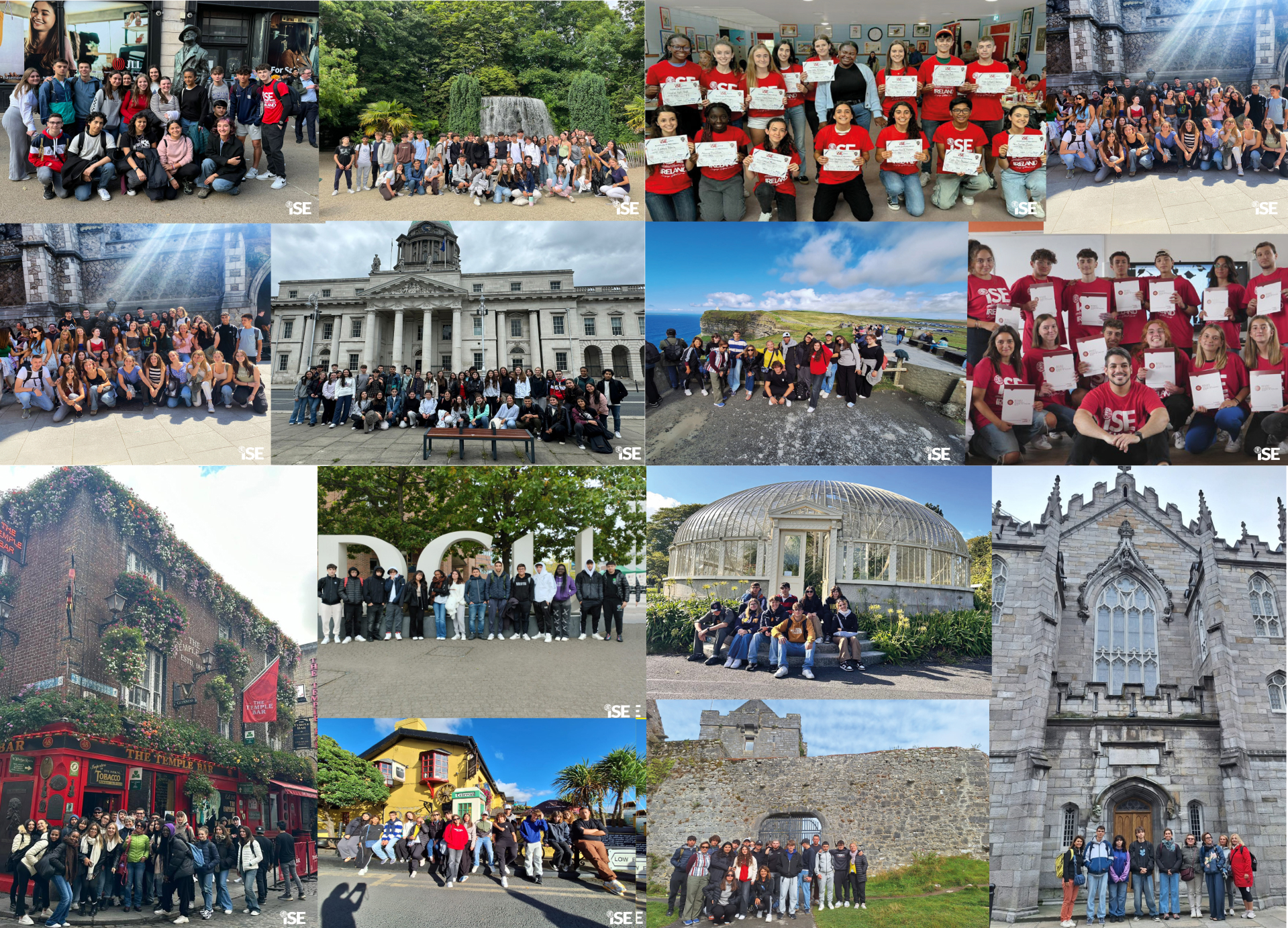
Photo gallery from Brussels

What To Expect

  • Placement test pre arrival - after your booking is confirmed, you’ll do a grammar/vocabulary test and a speaking test with a member of the academic team, to ensure you are placed in an appropriate level and you can start classes immediately after you arrive.
  • Induction before classes on your first day to welcome you to the school, and ensure you start learning straight away!
  • Highly dedicated, trained, and professional teachers are here to help you progress
  • Continuous assessment will help you see how close you are to your learning goals
  • Exposure to multiple accents and teaching/learning styles to ensure fairness for all learners
  • Weekly progress tests and regular feedback from your teachers will ensure that you are keeping up with the class, and identify any need for review(
  • Certificate of Attendance and Achievement
  • Expected progression: approx. one CEFR sub-level per 10-12 weeks (where applicable)

PRICE LIST 2026

(Dublin & Waterford)

Programme Host family Residence
2 Weeks Extra Week 2 Weeks Extra Week
English + Cultural Activities
(15 hours weekly tuition)
€1,290 €645 €2,190 €1,095
Semi-Intensive English + Cultural Activities
(20 hours weekly tuition)
€1,650 €825 €2,550 €1,275
English + Football / Multi-Sports
(15 hours English + 9 hours sports training weekly — 3×3-hour sessions)
€1,810 - €2,710 -
English + Trinity Exam Preparation
(15 hours English + 9 hours Trinity Skills weekly)
€1,750 - €2,650 -
English + Music
(15 hours English + 9 hours music activities weekly)
€1,810 - €2,710 -
English + 3D Printing Technology
(15h English + 9h workshops weekly) - Dublin
€1,810 - €2,710 -

HOST FAMILY OPTION

(Dublin & Waterford)

Students stay with carefully selected host families, experiencing Irish culture and daily life firsthand.

  • Shared or single rooms (depending on availability)
  • Full board (breakfast, packed lunch, dinner)
  • Accessible by public transport or school shuttle
family image

Student
Accommodation

Yugo New Mill – Mill Street, Dublin 8, D08 NN5V

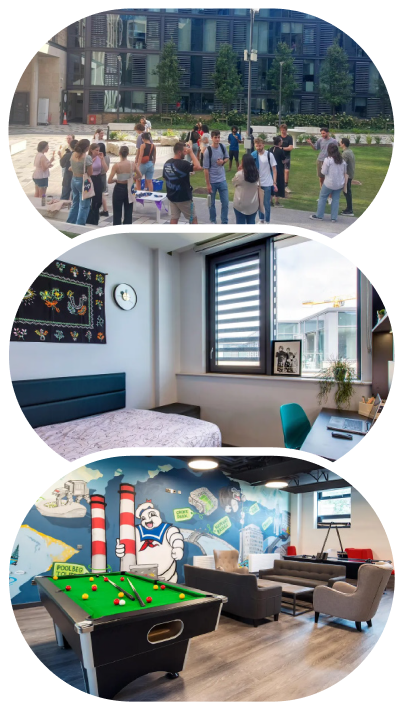
Located in Dublin’s trendiest area, The Liberties, Yugo New Mill places students at the heart of the city's culture and history, just minutes from top attractions like the Guinness Storehouse, Dublin Castle, and St Patrick’s Cathedral.

All-in-One Experience

Enjoy modern accommodation with en suite rooms and studios, study areas, a gym, games room, private cinema, and 24/7 security — all in a safe and student-friendly environment.

Live and Learn

With classrooms and accommodation in one place, students benefit from a comfortable, immersive study experience surrounded by cafés, markets, and vibrant city life.

Accommodation

Accommodation facilities

  • Indoors
  • Common room
  • Study rooms
  • Games room
  • Pool Table
  • Gym
  • Cinema room
  • Communal kitchen
  • Conference room
  • Courtyard
  • Electricity included
  • Water included
  • Contents Insurance
  • Laundry services
  • High-speed internet
  • Heating
  • Bike storage
  • Accessible entrance
  • Accessible rooms
  • Access ramp
  • Elevator
  • Post collection
  • CCTV
  • Keycard access
Gallery